
The Story Behind the Scars: A Neurosurgeon’s Perspective on the Flydubai Captain’s Wounds
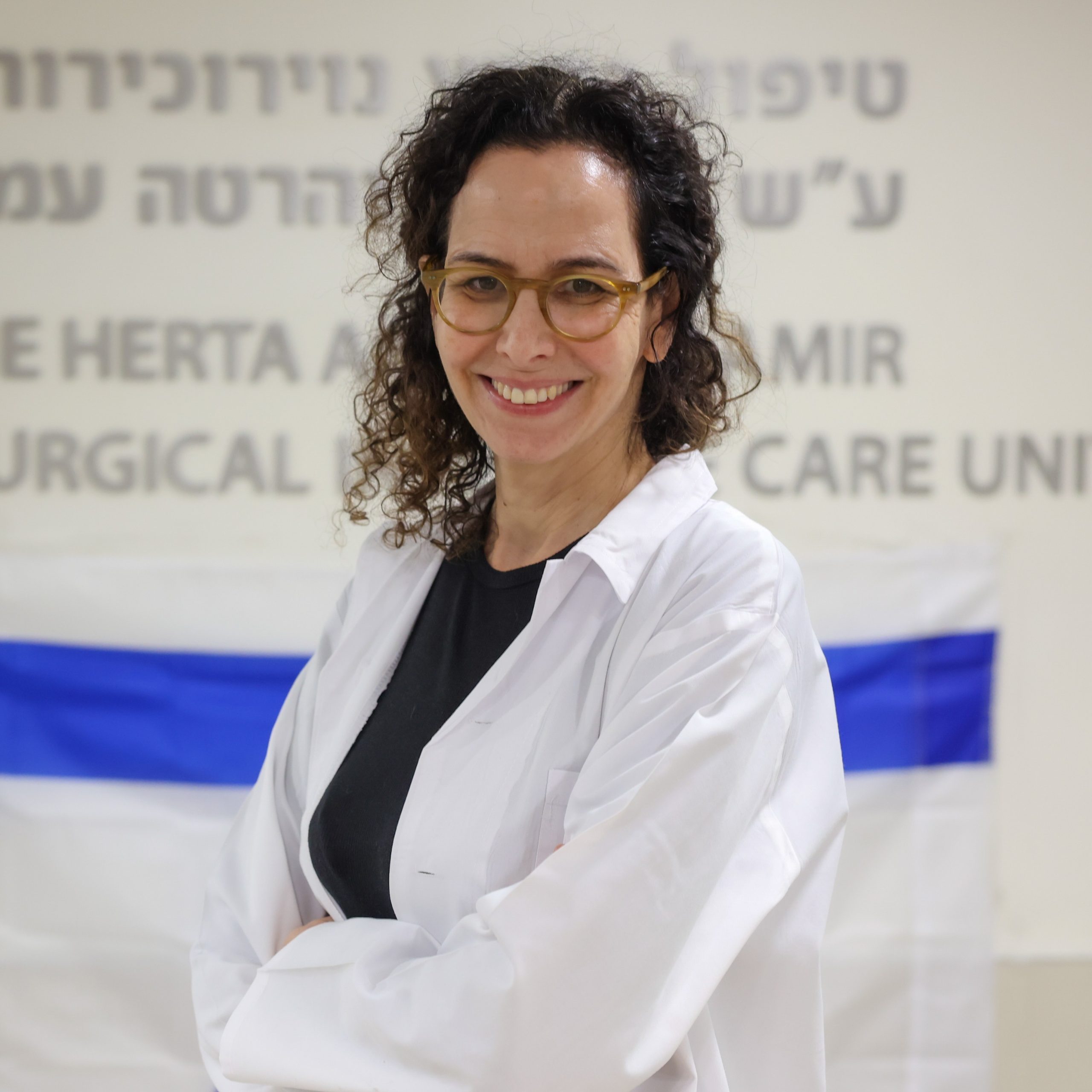
November 11, 2026 – Flydubai captain Smit Machchhar survived repeated axe blows to the head and still opened the cockpit door, an act that helped save the lives of all on board. Rambam’s Professor Rachel Grossman explains why the location of his wounds made treating them so delicate.
The attack came on September 30 aboard flight FZ1073 from Dubai to Tel Aviv, when Machchhar’s co-pilot struck him with the cockpit’s emergency axe. Despite heavy bleeding and blurred vision, Machchhar, 39, managed to open the cockpit door. Passengers then subdued the attacker, and two other off-duty Flydubai pilots on board landed the aircraft safely in Tabuk, Saudi Arabia. Recently, photographs from a ceremony in Abu Dhabi, where UAE President Sheikh Mohamed bin Zayed awarded Machchhar and the crew the Order of Zayed II, First Class. For the first time, photographs revealed the pilot’s head injuries to the world.
Professor Rachel Grossman, Deputy Director of the Department of Neurosurgery at Rambam and Director of Brain Tumor Center, explained that the photographs show lacerations to the scalp at the back of Machchhar’s head, most likely caused by the axe blows. She adds that skull fractures are also likely beneath the lacerations, consistent with reports of a depressed fracture.
According to Professor Grossman, the location of the injury is what makes it so complex. The wounds appear to lie close to the midline of the skull, directly above a major venous sinus—a channel that drains blood from the brain. Because of the sensitive location, surgeons do not always recommend lifting the broken bone fragments in that area, and when they do, they must work with great care to avoid damaging the sinus.
Professor Grossman acknowledges that the photographs alone cannot fully indicate how extensive the surgery was. Treatment may have been limited to debridement (removal of damaged tissue), wound cleaning, and closure of the scalp, or it may also have required surgery on the skull bones themselves.
One of the first questions after a serious head injury, Professor Grossman explains, is whether pressure inside the skull is rising. Left unchecked, it can be fatal. In severe cases, intensive care may involve general anesthesia and insertion of a thin catheter to monitor pressure. In extreme cases, if medication fails to lower the pressure, emergency surgery to remove part of the skull may be required. Machchhar appears to have avoided that path. Professor Grossman’s understanding is that he was conscious, and as far as she knows, not sedated or on a ventilator, suggesting that treatment likely focused on the wound itself.
Machchhar has reported problems seeing, which leaves several remaining questions. Professor Grossman notes that vision problems could result from injury to the visual-processing area at the back of the brain. Head injuries can also affect cognitive function, but the extend of any impairment depends on injury severity, the patient’s health before the injury, and age. A clearer picture will come with time, Professor Grossman adds, and notes that the months after an injury are critical for understanding its full extent.
For now, the scars tell only part of the story. The full picture may become clearer over the coming months as his recovery progresses.
Based on a Hebrew language article from ynet.


