More Than Snoring: Don’t Ignore the Signs
July 5 2026 – Does your child snore, suffer from chronic nasal congestion, have a runny nose most of the time, or sleep with their mouth open? These symptoms may indicate something more serious than a seasonal cold or the latest virus brought home from school.
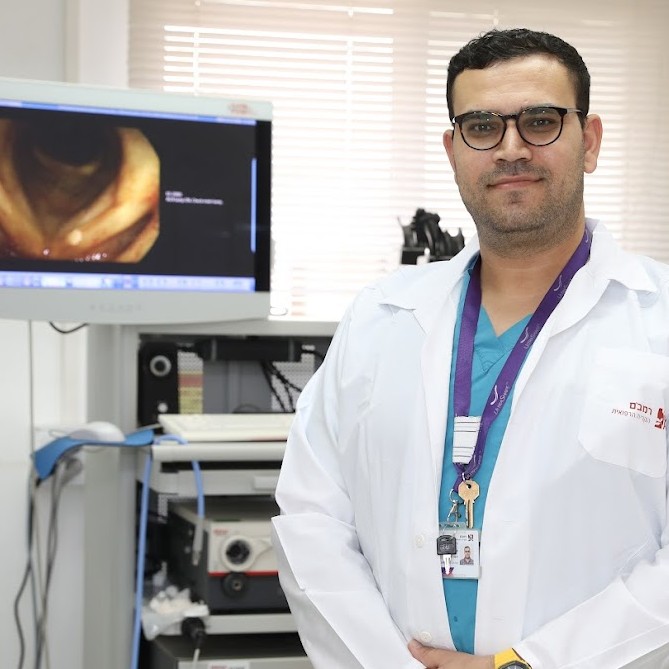
These symptoms are often dismissed as “just a phase” or simply part of a child’s normal development. However, Dr. Nadeem Habashi, an attending physician in the Department of Otolaryngology–Head & Neck Surgery at Rambam Health Care Campus in Haifa, explains that they are among the clearest indicators of enlarged adenoids. Other signs include excessive drooling, a hyponasal voice, and recurrent ear infections.
“The adenoids are part of the immune system,” says Habashi. “They help protect the body from infections during early childhood. Problems arise when they become enlarged and obstruct the nasal airway, forcing children to breathe through their mouths instead.”
During normal nasal breathing, the tongue rests against the palate, providing gentle pressure needed for the upper jaw to develop properly. Chronic mouth breathing causes the tongue to rest low in the mouth, disrupting normal growth of the palate and jaws.
Over time, enlarged adenoids can alter a child’s facial development, leading to what is commonly known as an “adenoid face”—a long, narrow face, a persistently open mouth, a receding chin, and a tired appearance. Early interventional prevent many of these developmental changes. However, if treatment is delayed until facial growth is complete, correcting them may require orthodontic treatment or even complex jaw surgery.
“Diagnosis is not always straightforward because enlarged adenoids cannot be seen during a routine examination,” explains Habashi. “The best opportunity to diagnose the condition is between the ages of two and six, when the face and jaws are developing most rapidly.”
Delayed diagnosis can have lifelong consequences. Without timely treatment, abnormal facial growth and breathing patterns may persist into adulthood, leading to crowded teeth, malocclusion (an improper bite), and obstructive sleep apnea.
“We often see patients in their 30s and 40s, and only after reviewing their medical history do we discover that they have been mouth breathing since early childhood,” says Habashi.
More Than a Cosmetic Issue
The effects of enlarged adenoids extend far beyond appearance. By disrupting normal breathing during sleep, they can cause repeated awakenings, lower oxygen levels throughout the night, impair concentration, and interfere with daily functioning. As a result, cognitive and behavioral difficulties may be misdiagnosed as attention deficit disorders when the underlying cause is actually obstructive sleep apnea.
Treating the airway obstruction is often only the first step. Many children must also relearn normal breathing and swallowing patterns.
Speech-language pathologists play a crucial role in this rehabilitation. However, exercises alone cannot resolve a physical airway obstruction. Only after the airway is opened can a child learn to breathe properly through the nose and use the facial and jaw muscles correctly.
When Should Parents Seek Medical Advice?
Persistent snoring and mouth breathing are not normal in children. Both warrant evaluation by an ear, nose, and throat specialist and should never be dismissed as harmless habits.
Not every child with enlarged adenoids requires surgery. Many respond well to conservative treatment.
“Healthy nasal breathing is essential for the normal development of the face, jaws, and brain,” concludes Habashi. “Parents should never dismiss persistent snoring or mouth breathing as something a child will simply outgrow.”
Based on a Hebrew language article that first appeared on the Mako website